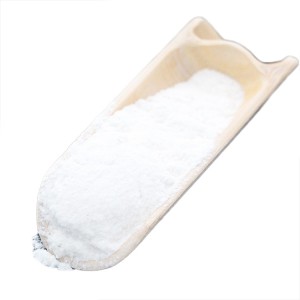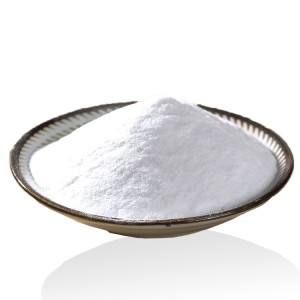
Sodium metabisulfite


Product Description:
Sodium metabisulfite (Na₂S₂O₅) is an inorganic compound that appears as white or yellow crystals with a strong, pungent odor. It is soluble in water, forming an acidic solution; when it comes into contact with strong acids, it releases sulfur dioxide and forms corresponding salts. Upon prolonged exposure to air, it oxidizes into sodium sulfate; therefore, sodium metabisulfite should not be stored for long periods.
Specification:
| project | index | |
| Sodium metabisulfite content (expressed as Na₂S₂O₅), w/% | ≥ | 96.5 |
| Iron (Fe), w/% | ≤ | 0.003 |
| Clarity | Through experiments | |
| Arsenic (As) (mg/kg) | ≤ | 1.0 |
| Heavy metals (calculated as Pb) / (mg/kg) | ≤ | 5.0 |
Application:
1. Gold Mining | INCO Process for Treating Cyanide-Bearing Tailings/Residues (Used in conjunction with activated carbon for tailings recovery)
Following the cyanide-based gold extraction process, cyanide-containing wastewater is treated using sodium metabisulfite, copper sulfate, and aeration. This process destroys cyanide ions and reduces the total cyanide content in the tailings; it is frequently employed alongside an activated carbon adsorption system.
Key Process Parameters: pH is typically maintained between 7 and 9; aeration is applied to decompose both free cyanide and complexed cyanides.
2. General Water Treatment
- Dechlorination: Removal of residual chlorine from water (commonly used upstream of reverse osmosis or activated carbon systems to protect activated carbon from oxidative damage caused by chlorine).
- Reduction of certain high-valence heavy metals.
3. Food Grade (A distinct grade; must not be interchanged with industrial-grade products)
Used as a bleaching agent, color stabilizer, or antioxidant in products such as dried fruits, edible fungi, and wine (subject to strict residual limits under the national standard GB 2760).
4. Textile Dyeing, Papermaking, and Chemical Industry
Used for bleaching, reduction, and dechlorination, as well as a reducing agent in the synthesis of dyes.
Packaging and Storage
Store in a cool, dry, and airtight place; protect from moisture. Keep separate from acids and oxidizing agents. The product is prone to absorbing moisture, which may cause it to lose its effectiveness.