

Copper sulfate is an important inorganic compound with the chemical formula CuSO₄. Depending on its water content, it can be divided into anhydrous copper sulfate (white powder, CAS number 7758-98-7) and pentahydrate copper sulfate (blue crystals, CAS number 16407-18-7). Pentahydrate copper sulfate is the most commonly used form in agriculture and industry, with a density of 2.28 g/cm³, a melting point of 110℃ (decomposes), and a boiling point of 650℃ (decomposes). Its aqueous solution is acidic, readily soluble in water, and insoluble in ethanol and ether. Due to differences in purity and application areas, it is carefully classified into several grades, including industrial grade, agricultural grade, food grade, and electroplating grade.
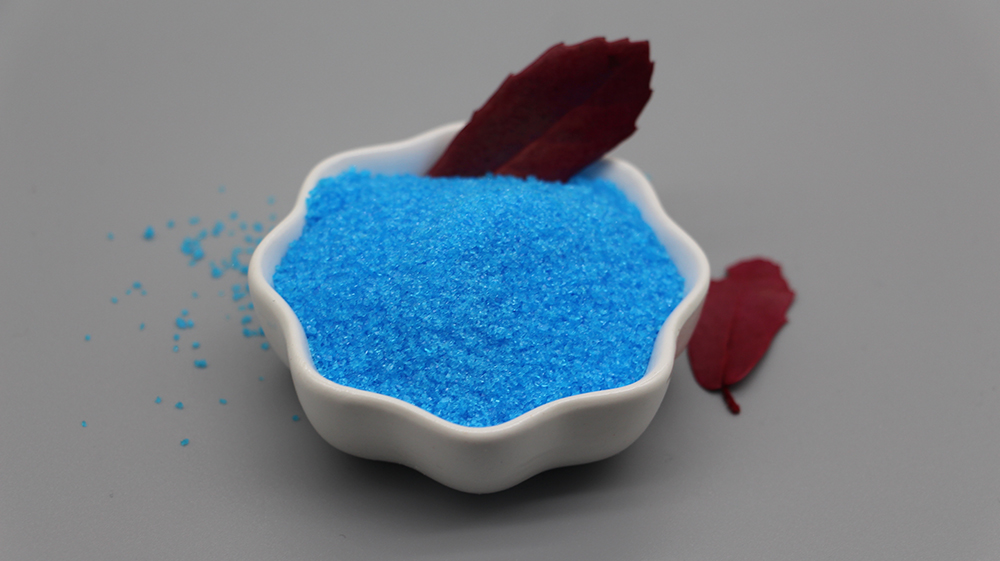
Copper sulfate, an inorganic compound that appears as blue crystals, is known for its high solubility in water, and its aqueous solution is acidic. Thanks to its diverse chemical properties, such as its ability to react with various compounds to form complexes or precipitates, copper sulfate plays an important role in many fields.
Industrial-grade copper sulfate
Industrial-grade copper sulfate has a purity between 96% and 98%, containing certain amounts of metal ions such as iron, zinc, and nickel, as well as other organic and inorganic impurities. This type of copper sulfate plays an important role in metal processing, chemical, and metallurgical industries, and is often used as a catalyst, electroplating auxiliary agent, and raw material in dye manufacturing.
Agricultural-grade copper sulfate
Agricultural-grade copper sulfate has a moderate purity to meet the needs of agricultural applications, and its content of heavy metal impurities such as lead, mercury, cadmium, and arsenic is strictly controlled. It is mainly used in the production of fungicides, insecticides, and fertilizers to prevent plant diseases and promote plant growth.
Food-grade copper sulfate
Food-grade copper sulfate has extremely high purity and must meet food safety standards. Harmful impurities are strictly controlled to ensure it does not pose a risk to human health. It is commonly used as a food additive, such as a nutritional fortifier, to supplement copper, but its usage must be carefully monitored and subject to relevant regulations.
Electroplating-grade copper sulfate
Electroplating-grade copper sulfate boasts a purity of over 99.7%, with extremely stringent requirements regarding the content of heavy metal impurities and other harmful contaminants to ensure the quality and performance of the electroplated layer. It is primarily used in the electroplating industry, such as in acid copper plating and chemical copper plating processes, providing a stable source of copper ions.
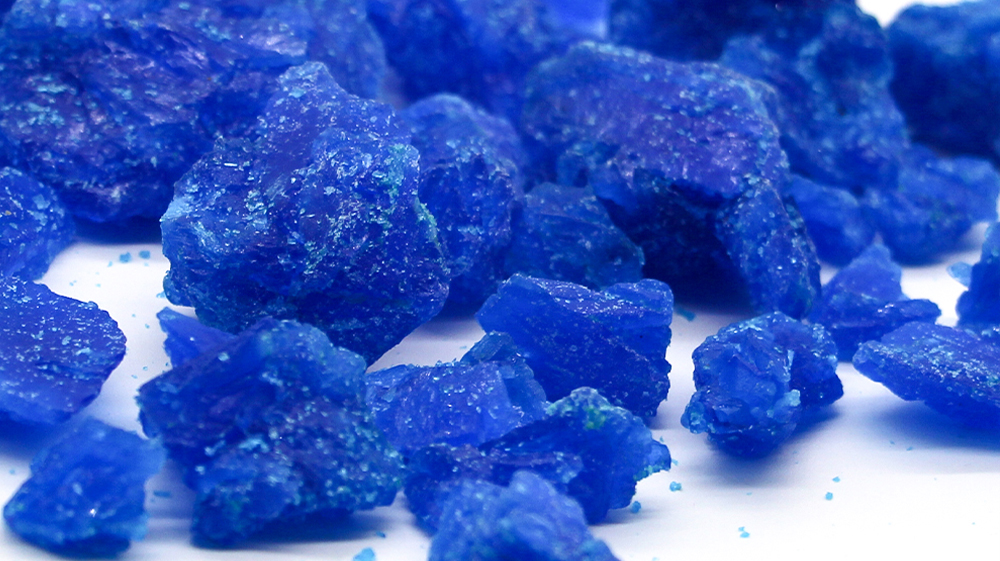
Industrial Applications
In the metal processing industry, industrial-grade copper sulfate is often used as a catalyst to drive chemical reactions. It is also widely used in dye manufacturing as a raw material in the synthesis of copper-containing dyes.
Agricultural Applications
Agricultural-grade copper sulfate is mainly used in the formulation of fungicides such as Bordeaux mixture, which effectively control diseases in fruit trees, vegetables, and other crops. In addition, it can also be used as a micronutrient fertilizer to supplement the soil with copper, thereby promoting healthy crop growth.
Food Applications
Food-grade copper sulfate plays the role of a nutritional fortifier in food processing and can be used to supplement copper in certain foods. However, its use must be strictly controlled and in accordance with relevant regulations to ensure that excessive intake does not harm human health.
Electroplating Applications
Electroplating-grade copper sulfate plays a crucial role in the electroplating industry. As a source of copper ions, it provides a stable electroplating environment for the plating solution, thereby ensuring the quality and performance of the electroplated layer. When using it, precise control of parameters such as the concentration and temperature of electroplating-grade copper sulfate is necessary to achieve the desired electroplating results.
Precautions
When using copper sulfate, regardless of its grade, safety must be given utmost importance. Copper sulfate is toxic to humans and animals; ingestion or inhalation of its dust may cause health damage. Therefore, always wear protective masks and gloves during handling to ensure direct contact with copper sulfate and its solutions. Furthermore, copper sulfate should be properly stored in a cool, dry, and well-ventilated warehouse, away from fire and heat sources, and containers should be kept sealed to prevent leakage and moisture absorption.
Post time: May-06-2026