

Since September 2026, the domestic toluene market has followed a pattern of rising followed by falling, ultimately closing with a net gain; price fluctuations were driven alternately by crude oil trends and supply-demand expectations. In the first ten days of the month, strong international crude oil prices pushed up aromatics costs, while tightening local supply provided further support for rising prices. Later in the month, expectations of tight crude oil supply eased and downstream purchasing remained sluggish, causing prices to retreat from their highs; however, the earlier gains were largely retained, resulting in an overall upward trend for the period.
Since September 2026, the domestic toluene market has experienced an initial rise followed by a decline, yet maintained an overall upward trajectory, recording a cumulative monthly gain of 9.77%.
Cost aspect:
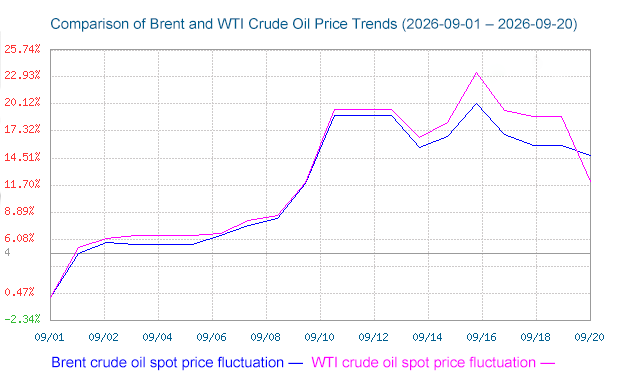
Toluene is derived from crude oil refining, making international crude oil the primary cost driver. In the first ten days of the month, concerns over tightening crude oil supplies drove oil prices higher; this provided robust cost support for toluene, pushing its prices up. However, during the latter part of the month, market expectations that Saudi crude supplies would gradually recover weakened the bullish case for oil. Consequently, crude oil futures fluctuated downward, eroding cost support and directly dragging down both toluene futures and spot prices; this shift in cost expectations was the key factor behind the market’s weakening performance in the latter half of the month.
Supply side:
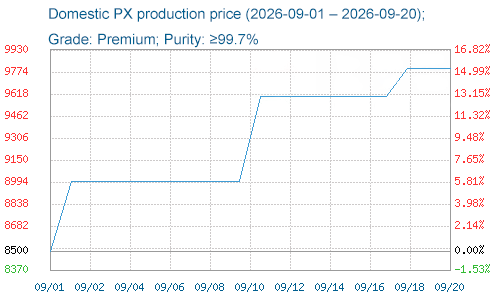
During the first half of September, maintenance at certain refineries tightened the availability of circulating domestic toluene and kept inventories low; petrochemical companies showed a strong inclination to support prices, driving an upward trend. However, as the month progressed, units undergoing maintenance gradually resumed operations and imported cargoes arrived, easing the supply tightness; expectations of increased supply capped further price gains, prompting petrochemical companies to lower ex-factory quotes and leading to increased sell-offs in the spot market, which accelerated the price decline.
Demand side:
Operating rates for downstream facilities—including those for coatings, solvents, and associated chemical units—remained stable, yet there was no incremental increase in purchasing; market activity was driven primarily by essential restocking. During the price rally in the first ten days of the month, downstream buyers largely purchased on an as-needed basis, with little inclination to wait and see. However, as prices fell in the latter part of the month, buyers adopted a “buy-on-the-rise, not on-the-fall” mentality and largely postponed restocking. Consequently, market trading slowed and buying interest remained weak; the lack of demand-side support exacerbated the decline in toluene prices.
Market Outlook:
Expectations of loose short-term crude oil supply persist, keeping oil prices under downward pressure and resulting in weak cost support. Domestic toluene supply continues to recover, further easing supply tightness, while downstream demand shows no signs of a near-term rebound; a combination of bearish factors is at play. The toluene market is expected to fluctuate weakly in the short term, with price trends largely driven by fluctuations in international crude oil prices and the pace of refinery shipment adjustments.
Post time: Sep-22-2026