

In early May 2026, the domestic hydrogen peroxide market experienced a precipitous drop. The average price of hydrogen peroxide fell by as much as 25% in the week ending May 12th, marking the largest weekly decline in nearly six months. This sharp drop was mainly due to the combined impact of concentrated supply and seasonally weakening demand. After the May Day holiday, the national operating rate approached 80%, previously shut-down plants completed their maintenance, and sales of supporting equipment (propylene oxide/caprolactam) increased. Meanwhile, the peak season for downstream industries was gradually coming to an end, and end-users had limited capacity to accept high prices.
In early June, the hydrogen peroxide market weakened, with prices falling by nearly 4%. At the beginning of the month, the average market price of hydrogen peroxide was 3.94% lower than the average market price on June 8th.
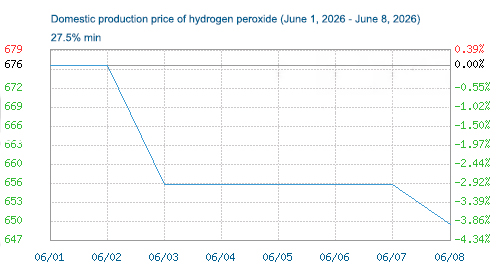
Reasons for the Decline in Hydrogen Peroxide Prices
Supply Side: With the May Day maintenance season over, production capacity has increased, market supply is ample, and inventory pressure has increased. Supply in northern regions has strengthened, putting pressure on water companies to sell and leading to rising inventory levels.
Demand Side: Downstream demand remains weak. The two main downstream industries for hydrogen peroxide—caprolactam and propylene oxide—are experiencing significant losses, resulting in lower operating rates and only maintaining basic raw material purchases, lacking any upward momentum.
Technical Forecast: Analysis of the hydrogen peroxide spot market on Business Society shows that, as indicated by the price trend chart, on May 11th, the 10-day moving average crossed below the 20-day moving average, indicating a downward trend. In early June, the 10-day and 20-day moving averages gradually converged, the difference narrowed, and the rate of decline slowed.
The current market is characterized by “increased supply and weak demand.” Although there were brief rebounds at certain times (such as September-October 2025) due to temporary maintenance or centralized procurement, these rebounds lacked sustained support, and prices faced downward pressure again in June 2026. Without a substantial recovery in downstream demand or proactive capacity withdrawal, a sustained price rebound is unlikely.
Post time: Jun-11-2026