

Coconut shell activated carbon is a black, granular, porous adsorbent material produced from coconut shells through high-temperature carbonization (600–900°C) followed by steam activation. It possesses a specific surface area of 900–1,500 m²/g and is characterized by a highly developed pore structure, strong adsorption capacity, and high mechanical strength.
Its core function lies in its highly efficient physical adsorption capability, which relies on an intricate internal network of micropores. The dimensions of these micropores correspond to the size of many common gas molecules; acting much like a magnet, they utilize intermolecular forces to firmly capture and trap specific gaseous molecules from the air. This is a spontaneous physical process that primarily targets gas molecules.
Suitable for gold extraction and precious metal recovery:
Used in Carbon-in-Pulp (CIP), Carbon-in-Leach (CIL), and Carbon-in-Column (CIC) gold extraction processes.
Features a hardness of 97–99%, which minimizes carbon attrition in moving-bed systems, and offers rapid adsorption kinetics.
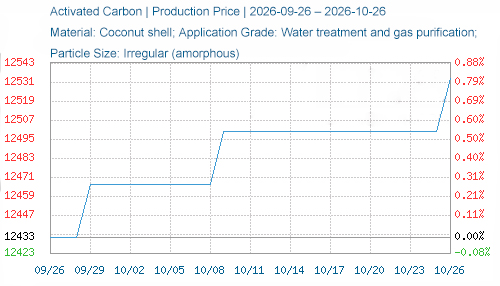
This week, most domestic activated carbon manufacturers have raised their prices. In East China, ex-factory prices for coconut-shell-based activated carbon used in water purification remain relatively firm; due to the high cost of upstream carbonized coconut-shell raw materials and rising import costs, there is little room for price reductions, and the overall market trend is stable with an upward bias.
On the demand side, the use of coconut-shell-based activated carbon in gold extraction and the new energy sector has remained relatively stable, providing support for firm market prices. In the short term, the market is expected to show a trend of fluctuation with an upward bias. The high cost of upstream carbonized coconut-shell raw materials—compounded by tight raw material supplies from major Southeast Asian producing countries (Indonesia and the Philippines) and rising logistics costs—has established a price floor for the finished products.
The tight supply of upstream raw materials is unlikely to change in the short term, and activated carbon prices are expected to fluctuate with a slight upward bias in the short term.
Post time: Oct-27-2026