

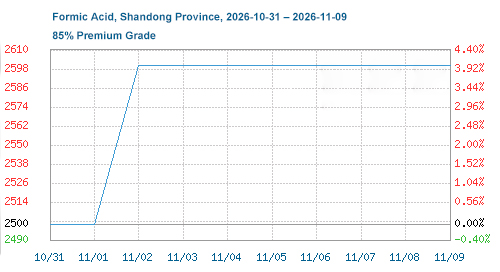
Domestic prices for formic acid have surged recently; as of November 9, the price of 85% industrial-grade formic acid had risen by 4% compared to the beginning of the month.
Supply: The realization of production cuts is the dominant variable in this week’s pricing.
The primary driver behind the upward shift in prices originates from the supply side. The effects of earlier production cuts continue to manifest, with corporate inventories generally declining and the volume of spot goods circulating in the market remaining tight. Major manufacturers have largely achieved a balance between production and sales, strengthening their resolve to maintain or raise prices. Supply has not shifted toward a state of abundance; rather, it has transitioned from “rapid tightening” to “stability at a low level,” providing a floor for prices.
Demand: Transactions are underpinned by essential, “must-have” buying, while there is little appetite to chase higher prices.
The demand side is the primary constraint preventing further price increases. As price hikes have filtered down the supply chain, rising procurement costs have led downstream buyers to shift toward a “just-in-time” purchasing strategy—buying only what is immediately needed—with little appetite for stockpiling. While manufacturers are moving products smoothly and market fundamentals remain solid, transaction volumes are limited to immediate requirements, failing to provide the momentum needed for a second round of price increases. Consequently, the market has reached a stalemate: suppliers are unwilling to lower prices, while buyers are unwilling to chase higher ones.
Market Outlook: Upward Momentum Persists
The supply contraction resulting from production cuts has already materialized, limiting downside risk in the near term. However, as demand is driven solely by essential requirements rather than an overall expansion in consumption, prices are expected to remain stable with a slight upward bias. Future price movements will depend on further shifts in market supply and demand.
Post time: Nov-11-2026