

In the first half of March, the domestic dimethyl carbonate market showed a trend of initial strong price increases followed by consolidation and decline at high levels. Market quotations fluctuated, but overall positive support was concentrated and strong; most traders maintained firm high prices, and some merchants tentatively negotiated shipments. Market bullish sentiment gradually cooled, and actual transactions were sluggish. 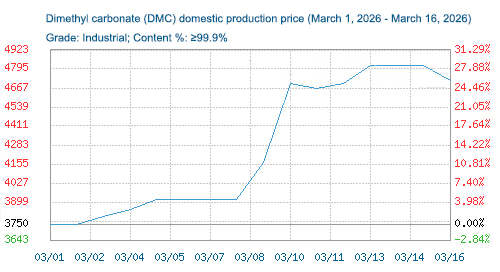
Core driving factors
Cost Factors: The Core Driver of Price Increases
Tense geopolitical tensions in the Middle East have triggered concerns about energy supply, leading to a sharp rise in international crude oil prices. This has driven up the prices of methanol and propylene oxide, two major raw materials, resulting in a dramatic increase in cost pressures for dimethyl carbonate (DMC) producers. Consequently, companies have been forced to significantly raise their prices and halt sales, becoming the core driver of this round of price increases.
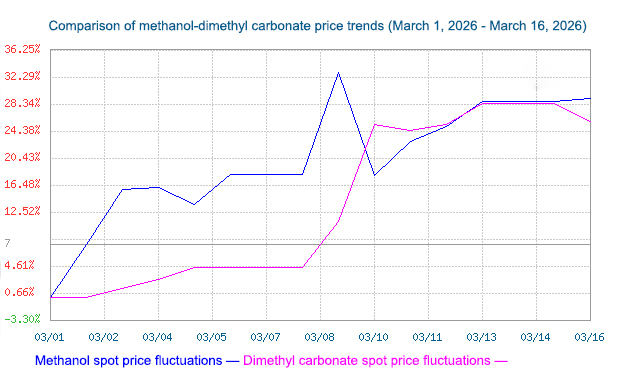
Methanol: Supported by continued geopolitical disturbances, expectations of reduced imports, and a gradual recovery in downstream demand, the market maintained a relatively strong performance. On March 16, prices rose by 29.13% compared to the beginning of the month, with costs providing strong support for dimethyl carbonate.
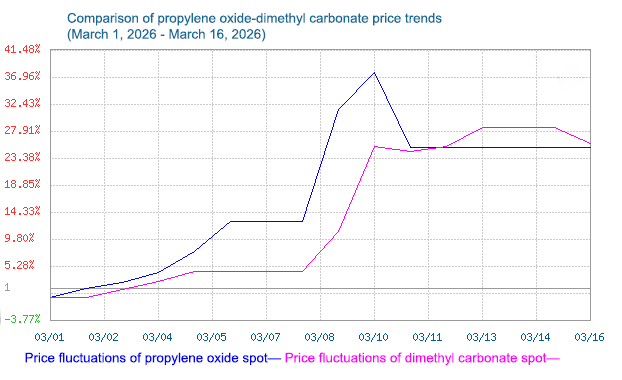
Propylene oxide: The market is currently in a stalemate. Supply-side plants are operating smoothly, with production plants experiencing smooth shipments and low inventory pressure. Prices are running at high levels. On March 16, the price of propylene oxide rose by 25.21% compared to the beginning of the month, further consolidating the cost support for dimethyl carbonate.
Supply Side: Tight Supply in Stages, Fueling Price Increases
Mainstream plants are operating normally, and the industry as a whole is operating steadily, but there is no significant increase in capacity. Factory inventories are generally low, and some manufacturers are slowing down order fulfillment and contract delivery, resulting in tight spot market liquidity. Suppliers are strongly inclined to maintain prices, while traders are holding onto their inventory in anticipation of further increases, exacerbating the tight spot market environment.
Demand Side: Primarily Driven by Essential Needs, Strong Wait-and-See Sentiment
Overall demand is characterized by a weak recovery in essential needs, high prices suppressing procurement, and sluggish transactions. The battery sector is the only bright spot, while traditional solvents and PC sectors are weak, offering limited support for high prices overall. Demand is mainly driven by small, spot orders and on-demand restocking, with no centralized procurement or stockpiling. Downstream buyers are exhibiting strong wait-and-see sentiment and low willingness to chase higher prices due to high prices.
Short-Term Outlook
Demand is unlikely to improve significantly, and high prices continue to exert downward pressure on downstream demand, resulting in a lack of sustained upward momentum in the market. On the cost side, high-level volatility is intensifying, and suppliers’ efforts to maintain prices may gradually weaken. The dimethyl carbonate market is expected to fluctuate weakly at high levels in the second half of March, with a risk of price declines. Key factors to watch include raw material trends, changes in factory inventory, and actual downstream purchasing activity.
Post time: Mar-20-2026